
01
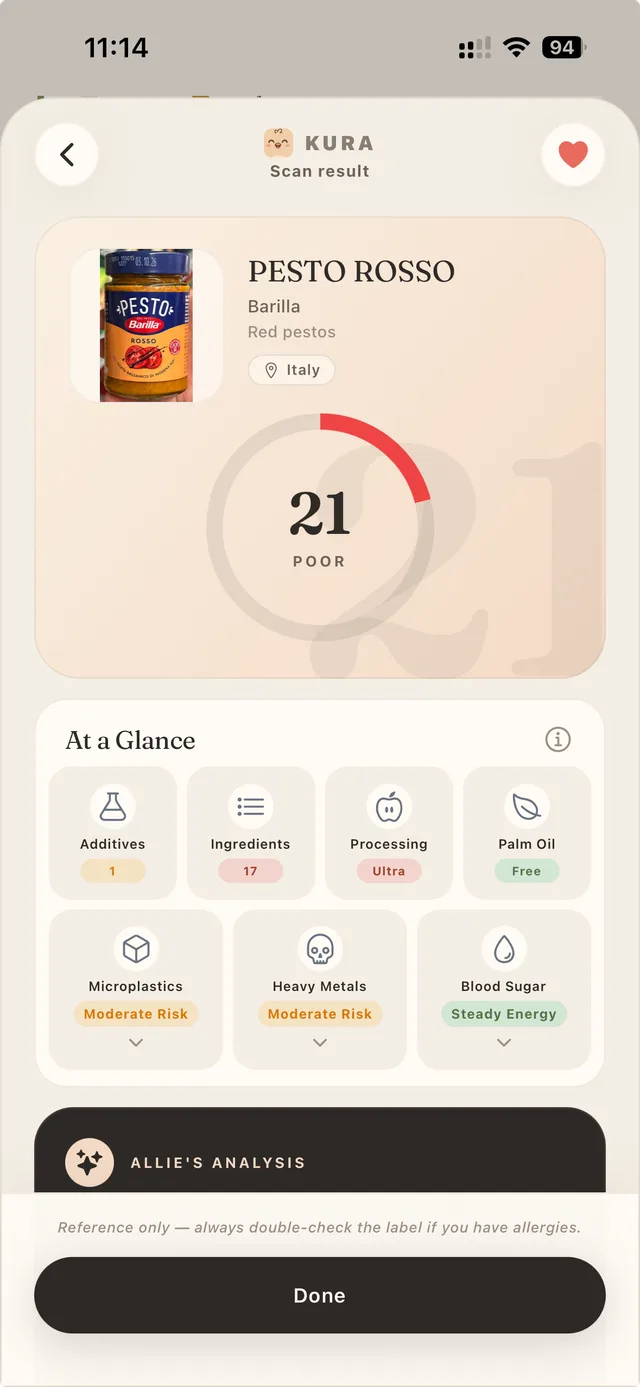
Scan the barcode
Look up a packaged food or cosmetic product. If the record is missing or incomplete, read the ingredient label with your camera.
Barcode and label scanning →Look up a packaged food or cosmetic product. If the record is missing or incomplete, read the ingredient label with your camera.
Barcode and label scanning →See food processing, additives and available nutrition. Compare relevant label information with your profile. Beauty products get a separate ingredient breakdown.
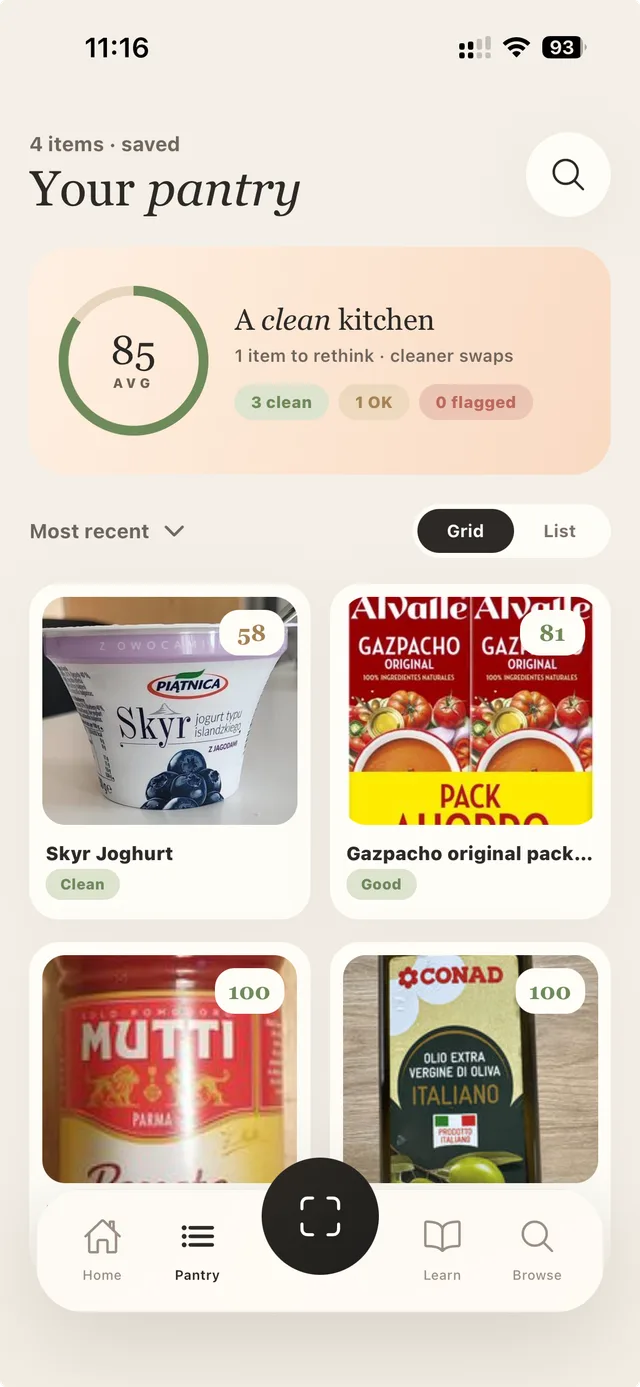
How the analysis works →Read the reasons behind the result, check the current package and save products to your pantry. Compare similar options as you shop.
Try your first scan →Lychee puts processing at the heart of its food score. Additives, ingredient quality and nutrition still matter, so a protein claim does not tell the whole story.
Explore processing-first scoring →Check available ingredients, allergens and trace information against your selected profile. A high food score and personal allergen suitability are separate signals.
Personalized allergen checks →Review sugar, salt, saturated fat, fiber, protein and available energy information alongside processing and ingredients. Processing and ingredient quality give those numbers context.
See the food scanner →Read food and cosmetic ingredient paragraphs with OCR when barcode data is incomplete. Check the extracted text and contribute corrected product information where practical.
Ingredient-label scanning →Save products and revisit your scans as you shop. Optional Premium adds more ingredient insights, AI explanations, healthier swaps and ad-free scanning.
Features and Premium details →Scan skincare, makeup, shampoo, deodorant and other personal-care products. Lychee explains recognized INCI ingredients, their functions and concern categories with a separate, exposure-aware beta model.
Understand surfactants, humectants, emollients, preservatives, colorants and fragrance terms. Unknown ingredients stay visible.
Read an INCI label →A cleanser and a moisturizer are used differently. Product type and exposure shape the cosmetic analysis; a label does not report every concentration.
Skincare in context →When ingredient coverage is too low, Lychee shows Not enough data. You can still review recognized ingredients and inspect the gaps.
Explore beauty scanning →Food lookup uses Open Food Facts; beauty lookup uses Open Beauty Facts. Lychee applies its own scoring logic and ingredient dictionaries. Records can be incomplete or outdated, so the package in your hand still matters.
Scoring priorities, coverage and useful checks before choosing.
Personal requirementsProfiles, trace statements and the limits of a scan.
Reading ingredientsIngredient functions, concern context and the rest of the label.
Missing barcode dataHow label reading works and how to check the result.
Free to download with core barcode scanning and product scores. Optional Lychee Premium unlocks additional analysis and features. The free experience may include ads; Premium includes ad-free scanning. See the current in-app offer or app-store listing for local prices, trial eligibility, and subscription terms.
Lychee uses a 1–100 food score that prioritizes processing. Additives, ingredient quality, sugar, salt, saturated fat, fiber and protein also matter. Available NOVA data and ingredient-based estimates inform processing; Lychee applies its own scoring rules. Missing data can reduce confidence or prevent a score.
Yes. Lychee scans beauty and personal-care barcodes and ingredient labels. Its beta cosmetic score considers recognized ingredients, concerns and exposure, including rinse-off versus leave-on use. It shows Not enough data when ingredient coverage is insufficient.
Lychee helps compare available ingredient, allergen and trace information with a selected profile. It cannot guarantee that a food is allergen-free or detect undeclared cross-contact. Always read the current label and follow your allergy care plan.
Try reading the ingredient label with Lychee. You can also submit or correct product data through its contribution flow. OCR and contributed records need checking; a missing ingredient list should be treated as incomplete data.
Previously saved product information can be available from local history or pantry data. New barcode lookups need network access; failed scans can be queued for retry. Offline access is not a complete offline product database.